Field Notes from a 4-Week Sprint on an ARPA-H Proposal
I'm sharing resources and lessons learned from a rapid-fire ARPA-H submission. NOTE: Each ARPA-H program can vary widely. Comments below may not apply to other programs.
I had the privilege of leading a team of 18 scientists from across 14 institutions as we submitted a $37M solution summary to an Advanced Research Projects Agency for Health (ARPA-H) program called Systematic Targeting of Microplastics (STOMP). The program is broken into three technical areas—detection, mechanisms of action, and removal of microplastics from the body. We took on Technical Area 2 (Mechanisms). As described in my last post, the STOMP program directly aligns with Engineered Resilience. Pollutants are an underestimated driver of disease, and addressing them requires mobilizing an interdisciplinary team of biotech leaders. (Stay tuned for more on Engineered Resilience in the coming weeks!)
ARPA-H has delivered a steady stream of funding announcements (i.e., Innovation Solution Opportunities or ISOs) for their new programs. Each program is highly competitive and can award tens of millions of dollars to large, interdisciplinary teams. Once a program is announced, there are just a few weeks to assemble, develop a solution summary, and estimate a sizable budget. Industry experts, startups, academics, and nonprofits are encouraged to work together on these high-risk, high-reward challenges.
STOMP is one of the fastest programs ARPA-H has ever deployed, and has garnered some of the greatest interest. Roughly 300 people attended the Proposers' Day in person, with another 300 tuning in virtually. Of note, in-person attendance has the advantage of sizing-up the competition, recruiting new teammates, engaging the program officers, and tuning in to sessions that were closed to virtual attendees.
After submitting our four-page solution summary and receiving ARPA-H's feedback, our team chose not to proceed with the 25-page full proposal (scroll below to "Interfacing with ARPA-H"). But, hopefully these tips and tricks below help others move faster through this application process or other similarly large grant opportunities. Most of the resources shared were built with Claude; I flag the places where Claude fell short or the outputs need validation. Every ARPA-H program is different, so treat this as a starting point rather than a ground-truth template. Always check the ISO and FAQs for the specific ARPA-H program.
Resources
- Finding a team — Each ARPA-H program hosts a teaming page where applicants may post that they are seeking a team. (STOMP's page is here. Email addresses are publicly exposed on this page.) New entries from participants flood this page in the first few weeks. To track, organize, and recruit team members, I created a dashboard (beta here), and labeled each candidate with specific expertise pertaining to the ISO sub-topic areas.
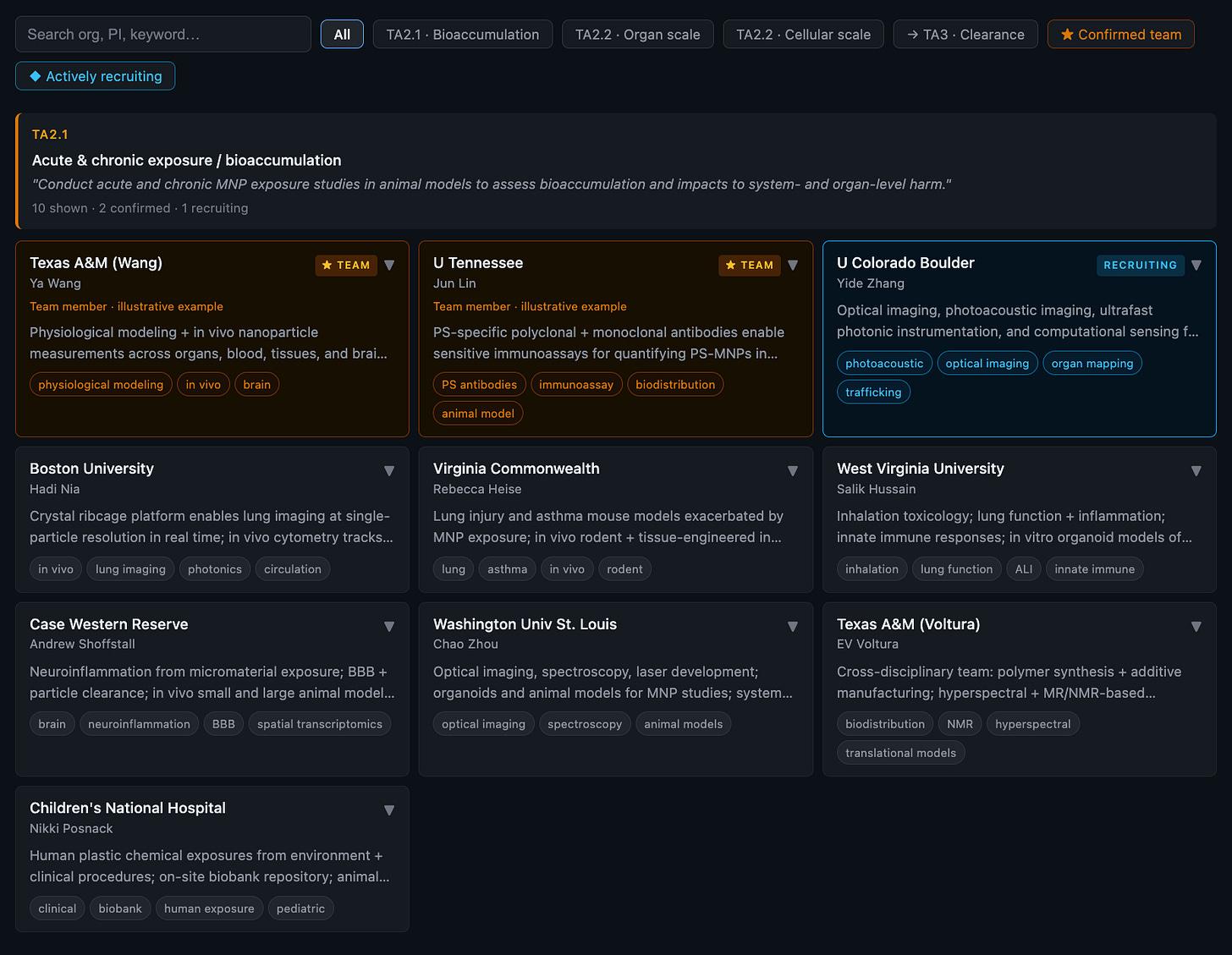
Figure 1. Example of STOMP Teaming page dashboard that was used to track prospective recruits across solicitation requirements. Highlighted boxes are for illustration only.
-
Seeking a prime organization — You will need a lead, or "prime," organization to serve as the administrative home for the grant. Here's a rough, generated list of past winning ARPA-H prime organizations (some row entries may be hallucinated). I also made a separate ranked list of potential prime candidates for STOMP. When interviewing prime organizations, be aware that large research organizations such as SRI International will expect to contribute to the experiments and analyses along with administering your grant. The prime does not need to have an extensive history of government-facing activity. In fact, for STOMP the prime did not need a SAM.gov registration number when submitting the solution summary. Beyond the prime/sub-award model, ARPA-H describes alternative teaming structures (i.e., partnerships and multi-party agreements).
-
Facilitating team participation — Do not assume every team member will read the ISO. Find ways to level set among your teammates quickly. We ran brainstorm sessions to fill in these tables that helped decide who had capabilities to address each specification, and then I used an intake questionnaire to collect the inputs that informed a figure for our submission.
-
Developing a schematic of your approach — Devise an overarching figure for your proposal to describe how each experiment slots into the main aims. I first sketched a hand-drawn version of Technical Area 2 for STOMP, which we then turned into a figure that was included in our application.
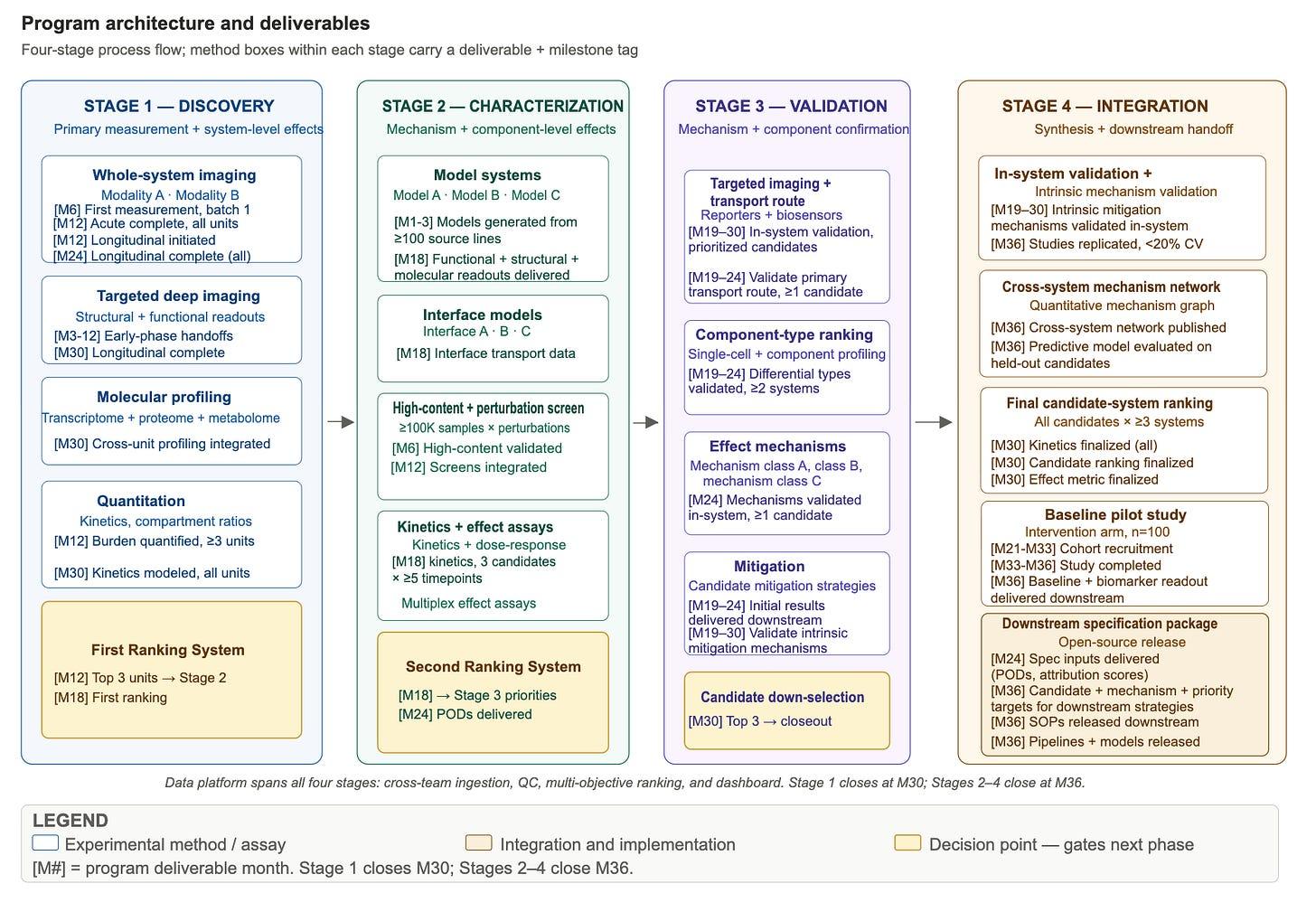
Figure 2. Illustrative example of drafting of a high-level approach for a solution summary submission
- Literature review — We mapped the microplastics literature to our team members' specific capabilities. Here is a starter list, with references (tab 2) and the mapping to each team member's expertise (tab 3). Not all citations are verified.
Notes of Caution
-
Recruited team members are not static — Team composition can shift while you prepare the proposal. Even though each sub-awardee (co-PI or contractor) may join as many teams as they would like, be prepared that members may jump ship and leave your team at any point. Have redundancy or backups in mind so your application stays competitive. Team composition may shift later too, either by choice or by ARPA-H's decision, before the award negotiation period.
-
Budget estimates — Team members may over- or underestimate their budgets. For the solution summary stage, rough estimates are fine, as long as everyone includes both direct and indirect costs. Itemize the costs exactly as the ARPA-H instructions specify, and include a timeline if one is required.
-
Third-party services are available — Consulting firms can help scope, write, organize, and manage a large, multi-institution team with many sub-awardees; EverGlade and Eva Garland are two. Each has its own business model (e.g., fixed rate, T&M, combined packages) and offers both pre- and post-award services. Ask for full pricing structure on your first call.
-
Third-party advice — Take in all advice that veteran ARPA-H applicants are generously willing to share, but remember that not all of it will apply to your ISO. Other resources, such as Eva Garland's, apply more broadly across programs.
-
Prevent disqualification — Search the ISO for the words "shall," "must," and "should." Missing any of these requirements can render your team ineligible. We generated a requirements table for STOMP (tab 1) and compared it against our proposal (tab 2). The table was a bit unwieldy and still needs refinement.
Interfacing with ARPA-H
-
FAQs — Unlike NIH grants, ARPA-H program officers will not interact directly with teams once the ISO is published. You can pose questions through ARPA-H's portal, but whether and when it will be answered is unclear. The FAQ page is hard to navigate and has to be checked frequently; I would recommend building a scraper that flags new questions as they post.
-
Submission — The instructions and formatting are specific, and the language differs from an NIH-style grant. Seeing other applicants' successful submissions can greatly help, even when requirements differ between programs.
-
ARPA-H portal — Program officers warn against submitting at the last minute when portal traffic is heaviest. After submission, a status page shows your application's progress, but it may not update until days after you receive an email.
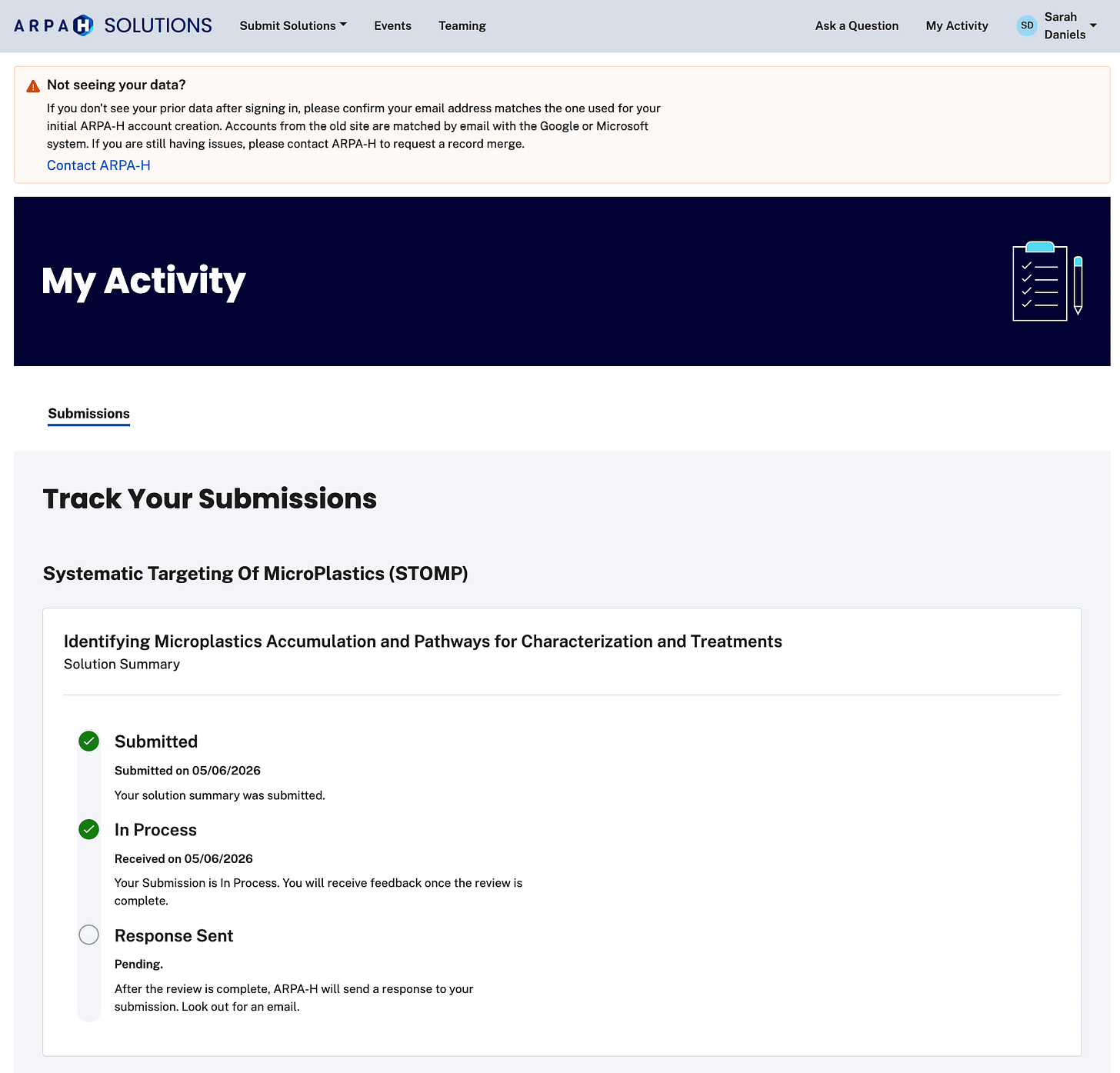
Figure 3. ARPA-H portal status bar after submission. An email may be received before "Response Sent" is marked. Check your inbox.
-
Response — We received a PDF letter from the PO which noted that STOMP's review team discouraged us from applying to the full proposal. Out of the seven noted rubric items, we only missed one. It stated that we did not "demonstrate viable technical feasibility to achieve expected outcomes."
-
Feedback meeting — We requested time to meet with the STOMP team and were offered a five-minute time slot. I'm sharing nondescript notes of ARPA-H's verbal feedback to keep the anonymity of our teammates. I drafted my own written response to each point, but there was no time to share during the call.
STOMP was a rare chance for scientists across the country to build new working relationships that harness the most innovative biotech solutions against an emerging pollutant and its downstream health effects. This reinforced a core thesis behind Engineered Resilience: the talent, tools, and determination to tackle emerging pollutants already exist. What's missing is a focal point to bring them together. Stay tuned while we keep building; if you are a researcher or funder studying the intersection of pollution and human health, reach out here.
Thank you to Pranam Chatterjee and Loren Looger for initiating the STOMP team and inviting me to lead this proposal. Much gratitude to Ben Andrew, Sarina Abrishamcar, and Ariana Caiati for providing meaningful technical support along this journey. Expressing my deep appreciation to every STOMP team member, for your impactful contributions and for trusting in me to steer us across the finish line.