Announcing Engineered Resilience
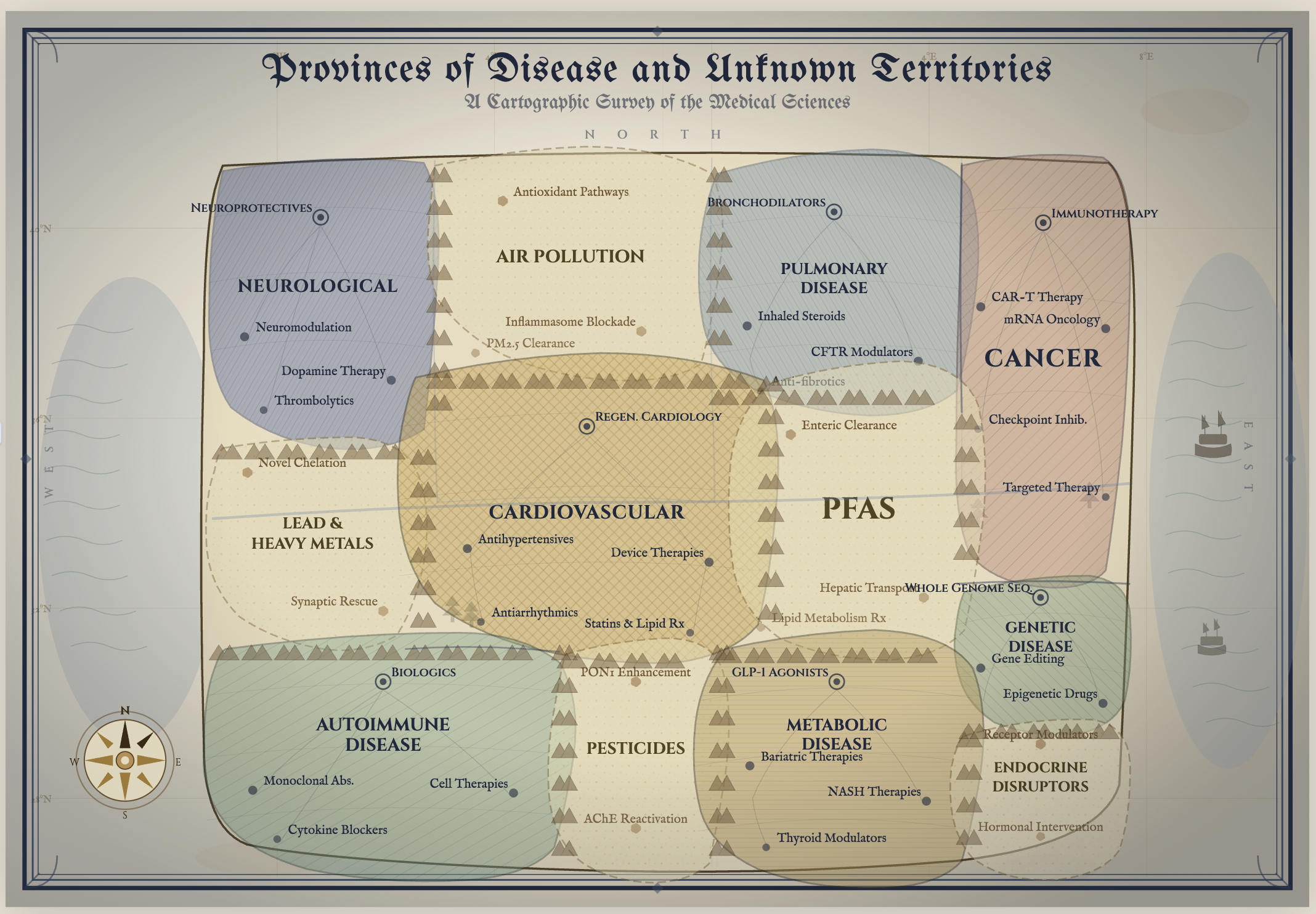
Today we release a new thesis, which we believe best describes how to fill the void between pollutant exposures and cutting-edge biotech before disease manifests. This work has been built with input from technologists, domain experts, funders, and practitioners.
Once you see the uncharted territory of pollutants as major drivers of disease, you can't view the mapping of human health the same again.
Many major chronic diseases in the US are labeled "idiopathic," meaning clinicians have no explanation for how a patient got sick. For example, roughly 90% of Parkinson's cases (Pang et al., 2019) and 95% of common hypertension cases (Carretero & Oparil, 2000) have no identifiable cause. Yet for most of these cases, the environmental drivers remain under-investigated — even as pollutant exposures are quietly driving an enormous share of that disease burden. Air pollution contributes to an estimated 100,000-200,000 deaths annually (Thakrar et al., 2020), lead exposure still accounts for over 400,000 deaths per year (Lanphear et al., 2018). Endocrine disrupting chemicals, found in consumer products and pesticides, are responsible for an estimated 90,000 excess deaths (Trasande et al., 2024). Emerging chemicals of concern, such as PFAS, microplastics, and industrial products, continue to add to the toll, though the full contribution remains unquantified.
A rational system would invest R&D proportionally to the cause of disease. Ours does not. Less than 1% of grants from the National Institutes of Health address environmental causes, while the rest goes to genetics, treatment, and disease management. Pollutants cause cellular-level damage that accumulates over years before symptoms appear, which means there is a window for detection and intervention prior to disease onset that we are ignoring.
We've worked tirelessly in the Pollution Program on projects to identify and treat the harm caused by pollutants prior to disease onset. Daniel Goodwin came at this as an entrepreneur who saw pollution as an untapped molecular challenge for biotech, while Sarah Daniels approached it with one foot rooted in environmental health and the other in undervalued corners of toxicology.
Over the next several weeks, we're laying out the economic case, the funding void, the four shifts required to reorient the field, and the specific research priorities where work can start now.
What's already in motion
We've pressure-tested our thesis through:
-
Creating the first-ever Target Product Profile (TPP) for a diagnostic targeting a ubiquitous pollutant. TPPs are a standard tool the biotech industry uses to define specs before committing resources for a new biomedical product
-
Exploring molecular biomarkers linked to early life exposure to pollutants that can enable better detection of long-term harm and targets for treatment in collaboration with Rushdy Ahmad and team at the Wyss Institute's Diagnostic Accelerator and leaders on the Early Life Exposures in Mexico to ENvironmental Toxicants (ELEMENT) study team including Dr. Howard Hu at University of Southern California, Dr. Karen Peterson at University of Michigan, and Dr. Hector Lamadrid-Figueroa at the National Institute of Public Health of Mexico.
-
Rapid-response blood sampling following the largest battery fire in U.S. history to identify signatures of immunological responses in six subjects using single-cell RNA sequencing. In partnership with co-founders of ImYoo, Tatyana Dobreva and David Brown, we generated one of the first high-resolution molecular datasets from symptomatic individuals after such an event.
-
Hosting the first "Trends to Targets" workshop, bringing environmental health researchers, biotech leaders, and healthtech founders together to identify tractable research priorities in this space
Focus areas deserving of a platform
Through our convening, conversations with the knowledge trust of experts, and learnings on the ground, here is a sampling of focus areas of interest:
-
Mapping exposure to disease: Sub-typing of diseases is incomplete. Molecular signatures of past exposures could be used to stratify diseases based on the initial tipping points set off by pollutants.
-
Proving molecular mechanisms: Not all mechanisms have been studied equally and some are likely to be influenced by an accumulation of pollutants. Attention must be paid to these unexplored clues of long-term damage.
-
Deploying Biotech Playbooks: Biomarkers alone are dead ends. Cholesterol was not routinely measured until statins were invented over 20 years later. Screening tools must be paired with evidence-based interventions in order for the medical community to take the effects of pollutants seriously.
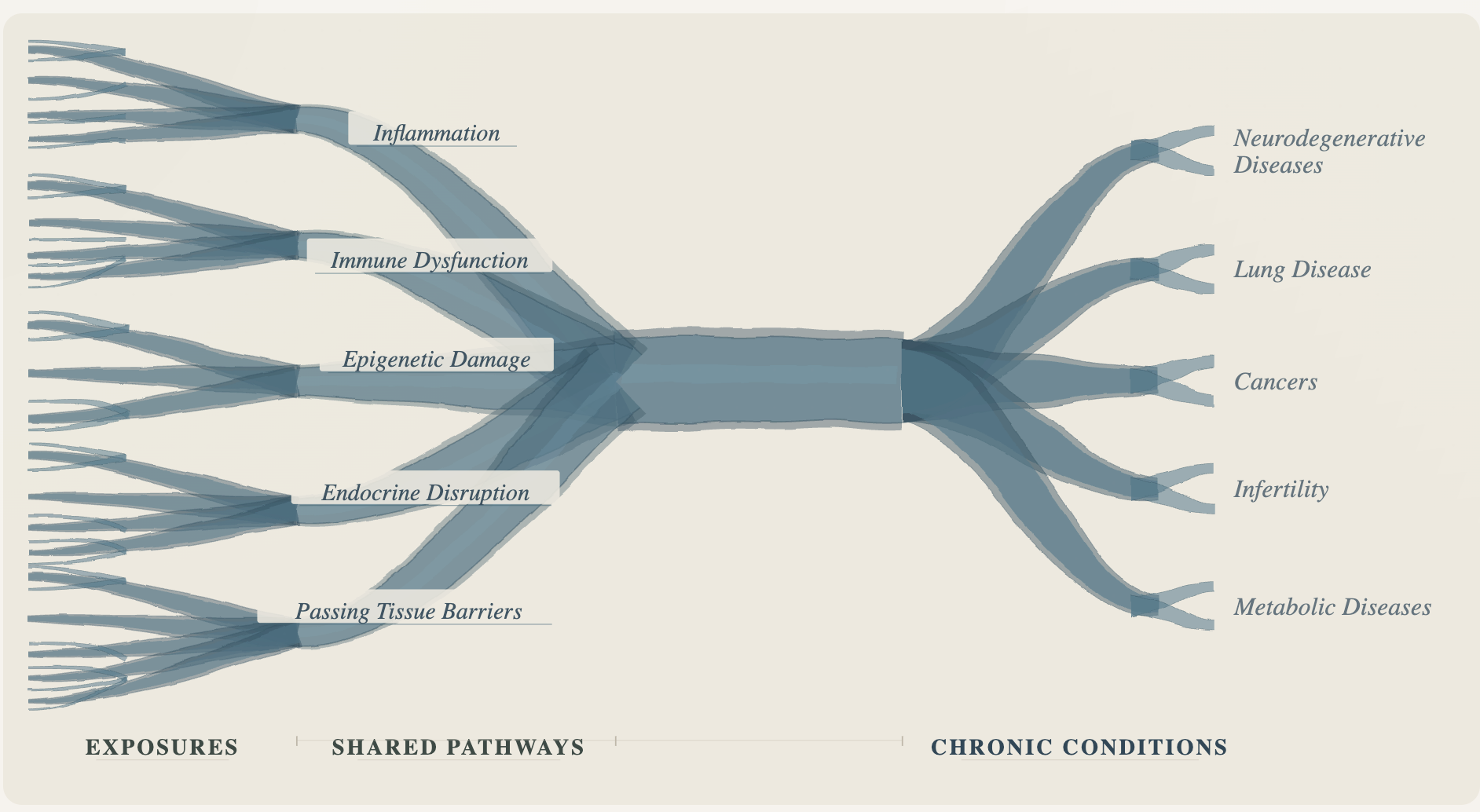
Figure 2. Many pollutant exposures have similar effects on cellular pathways that ultimately lead to one or more chronic disease outcomes over time. What are the critical points of cumulative damage and where is best to intervene? More to come in an upcoming release.
The release schedule
Our roadmap will be released in a series throughout the upcoming weeks for bite-sized consumption.
Release 1: The Impact Model — We break down the sizable share of chronic disease attributable to environmental exposures, the investments required for R&D for early interventions, and the economic impact in reduced healthcare costs. The numbers are staggering, and largely invisible to the healthcare system.
Release 2: The Funding Gap — We reveal why the spaces between NIH, EPA, and NSF have become a graveyard for basic and translational science in studying the relationship between pollutants, detection, and early interventions.
Release 3: The Thesis — We define "Engineered resilience" by laying out four domains (the lab bench, translation to the clinic, policy reform, and chemical defense) that must rotate toward a biotech-builder orientation in order to address new targets of disease that are informed by pollutant exposures.
Release 4: What Can We Do Today? — We unveil research priorities and strategies using a new model to identify problems worth solving.
Release 5: White paper — We end with the full thesis for long form consumption
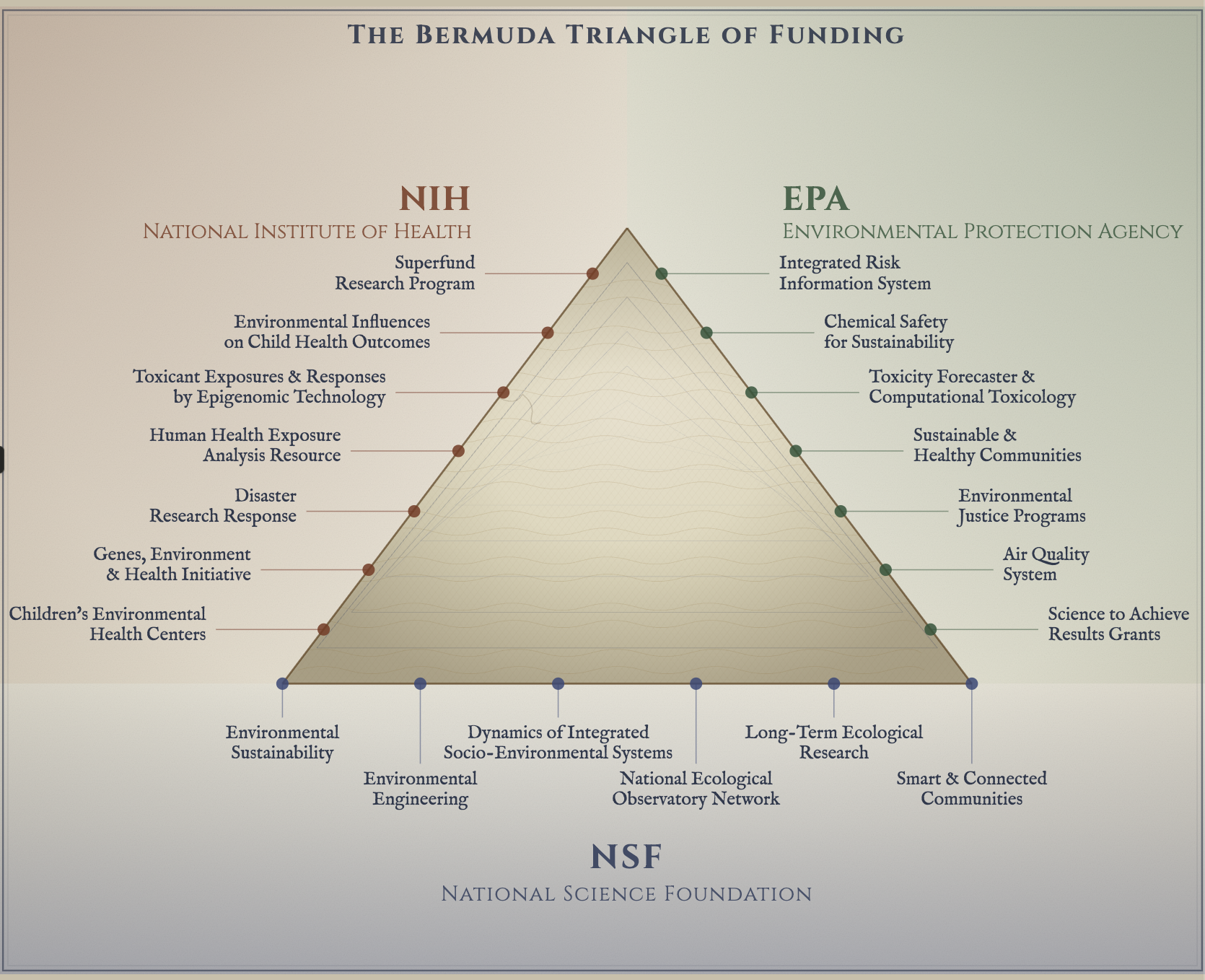
Figure 3. A schematic of the Bermuda Triangle funding gap between NIH, EPA, and NSF. More to come in an upcoming release.
Our door is open
We are building in public because the people who can accelerate this work are distributed across fields that do not currently talk to each other. This outreach is to open the doors for all to finally enter the same room.
We're particularly eager to hear from:
Funders — in philanthropy, investing, and grant-making who are ready to support a new type of blended capital model that carves a path for this unmet need
Doers — as bench scientists, clinicians, policy experts, and defense specialists working in the trenches on pieces of this problem
Follow along with updates on Engineered Resilience by subscribing to our newsletter.